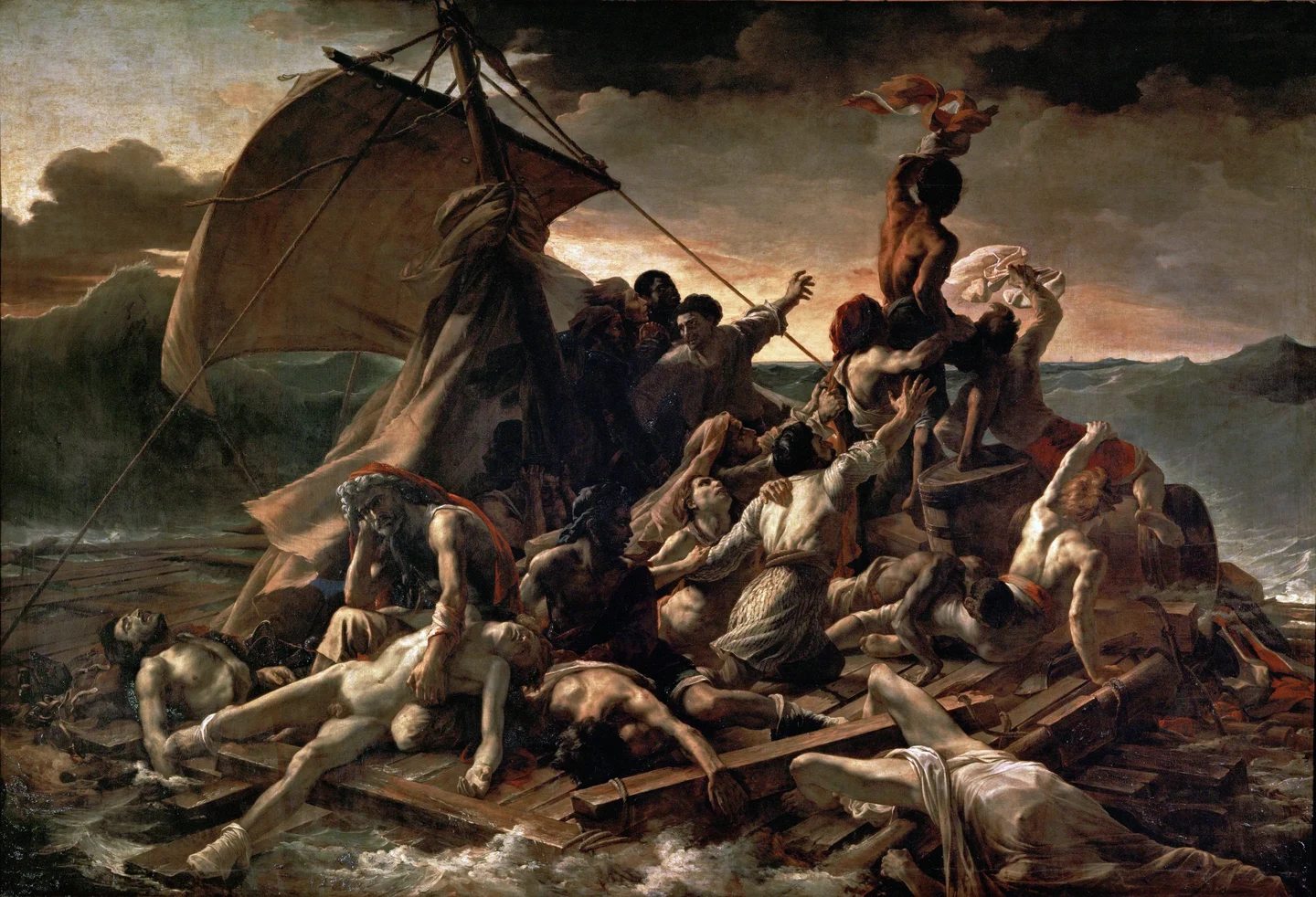
Wreckage and Witness: The Story of The Raft of the Medusa
In July 1816, the French frigate Méduse ran aground off Mauritania through the incompetence of a politically-appointed royalist captain. Of the 147 people abandoned on a makeshift raft, fifteen survived thirteen days of starvation, mutiny, and cannibalism. Théodore Géricault spent eighteen months transforming that atrocity into a 4.91 × 7.16-meter canvas — interviewing survivors, sketching the dead, shaving his head, keeping a severed head in his studio — that became the manifesto of French Romanticism. The painting won a gold medal at the 1819 Salon, earned 40,000 London visitors in 1820, and reached the Louvre in 1824 through an auction ruse orchestrated by Géricault's closest friend. It now hangs in Salle 700, Denon wing, as the permanent rebuke its creator intended.

Wreckage and Witness: The Story of The Raft of the Medusa

The disaster that made the painting possible
The monk's studio and the borrowed head
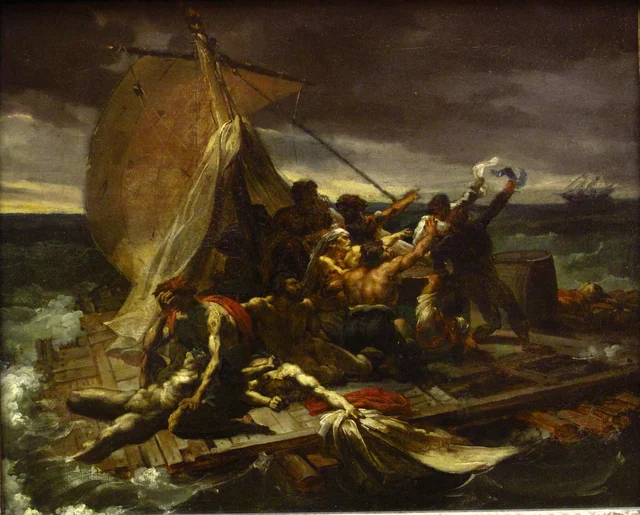
What the painting shows — and what it argues
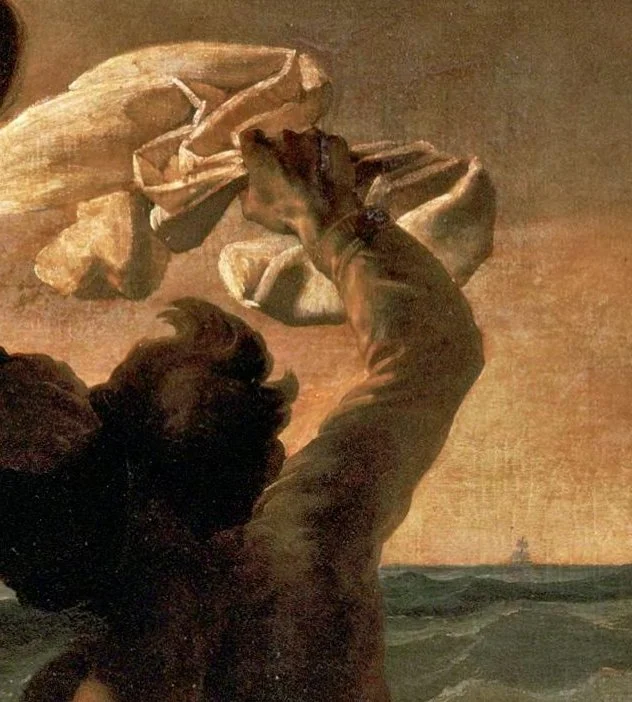
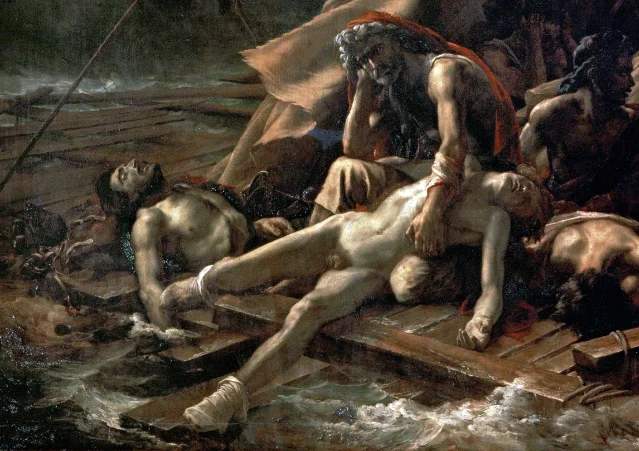
The Salon of 1819 and the quip that missed the point
London, 40,000 visitors, and the return home
The auction, the ruse, and 6,005 francs
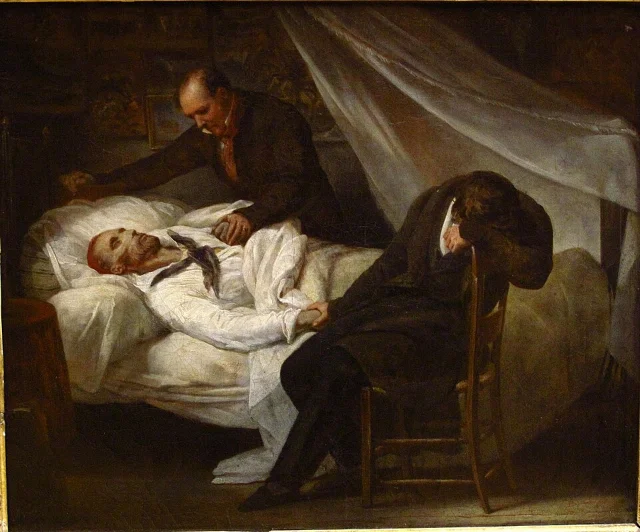
What the Louvre did with it
The manifesto that changed the room
Salle 700, Denon wing
References
- 1Wikipedia: French frigate Méduse (1810)
- 2Wikipedia: The Raft of the Medusa
- 3Musée du Louvre: Le radeau de la Méduse, INV 4884
- 4Wikipedia: Théodore Géricault
- 5Art & Object: The Horrifying History Behind "The Raft of Medusa"
- 6Histoires de Parfums: August 25, 1819 — The Raft of the Medusa
- 7Nineteenth-Century Art Worldwide: An American Copy of Géricault's Raft of the Medusa
- 8Wikipedia: Pierre-Joseph Dedreux-Dorcy
More from this channel
- The Bull Was a Ship: Rembrandt's Abduction of Europa and the Merchant Who Commissioned It
- The Best Ship to Come Down the Line: Apollo 11's Command Module Columbia
- The Man Who Stared Back: Velázquez's Portrait of Juan de Pareja
- The Stone That Broke the Silence: Rosetta Stone, British Museum EA 24
- Pulled from the Sea
- The Dining Room That Ate Its Owner
- The Book a Queen Held in Her Palm
- The Painting That Fits in Your Hands — and Cannot Be Imagined Twice
Related content
- Sign in to comment.